The brochure says $450,000. You sign. By the time the keys are in your hand, you’ve spent $620,000.
Sound familiar?
This is the template home trap — and it catches thousands of Australian families every year. The advertised price is real. But what it actually includes? That’s a very different story.
Here’s exactly how it works, and how to make sure it doesn’t happen to you.
What Is a Template Home?
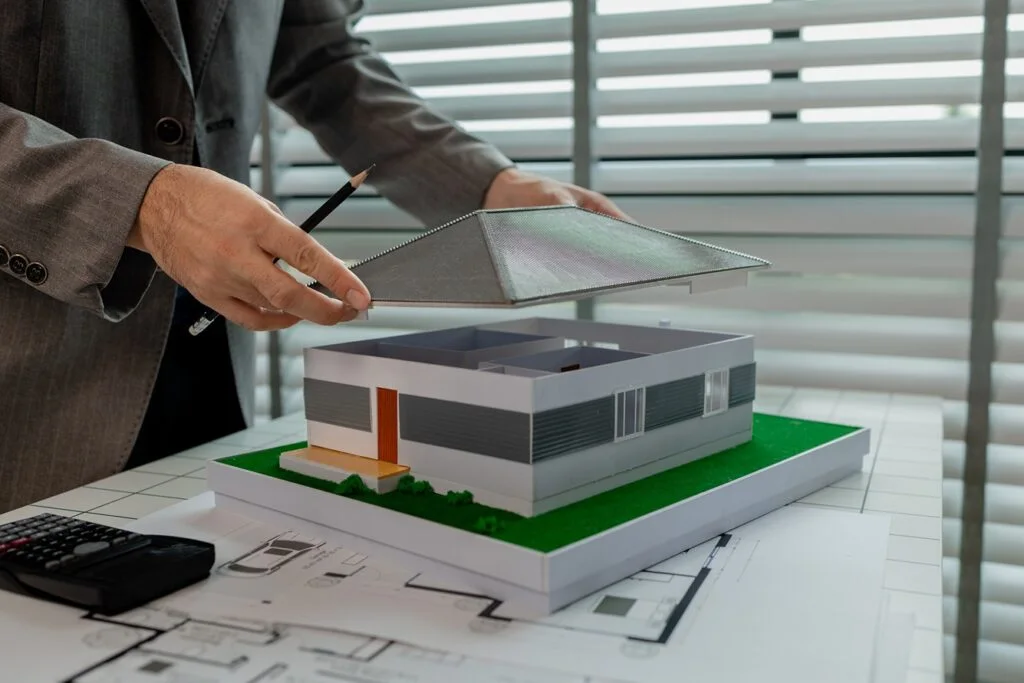
A template home — also called a project home or display home — is a pre-designed floor plan that a volume builder constructs repeatedly. They’re mass-produced, cost-engineered, and priced with one goal in mind: to get you through the door and into a contract with the lowest possible headline number.
The problem isn’t the design itself. The problem is what’s quietly left out of the price.
The Low Base Price Is Designed to Attract You — Not to Inform You
Volume builders spend significant money on marketing. Their base prices are crafted carefully — low enough to pull buyers in, but structured so that almost everything you actually want costs extra.
The kitchen you saw in the showroom? That’s not the kitchen in the base price.
The tiles, the facade, the flooring, the alfresco? All upgrades. Every single one.
This isn’t accidental. It’s a business model. And once you’re emotionally invested in a design and partway through the process, saying no to upgrades feels like settling. So most buyers don’t. They keep adding. And the price keeps climbing.
The Hidden Costs Nobody Quotes You Upfront
Here’s what regularly gets left out of a template home’s base price:
Site Costs
Template homes are designed for flat, standard blocks. If your land is sloped, narrow, rocky, or in a flood or bushfire overlay, the builder will charge you site costs to modify the design. These are often not quoted until after you’ve signed the contract — and they can add anywhere from $10,000 to $50,000+ before a single wall goes up.
Upgrades and Inclusions
The finishes displayed in the showroom are almost never included at base price. Expect to pay extra for stone benchtops, quality floor tiles, ceiling height upgrades, insulation beyond minimum requirements, and any facade that doesn’t look like the cheapest option on the list.
Connections and Compliance
Power connections, gas connections, council fees, driveway crossovers, letterboxes, clotheslines, and flyscreens are all commonly excluded. Small individually, they add up to tens of thousands collectively.
Landscaping and Fencing
You’ll receive a house. What surrounds it is entirely your problem — and your cost.
Variations and Changes
Change anything after the contract is signed and you’ll pay a variation fee. These are often disproportionate to the actual work involved.
The Upgrade Spiral in Real Numbers
Let’s look at how a $450,000 base price becomes something very different:
| Item | Added Cost |
|---|---|
| Kitchen and stone benchtop upgrades | $12,000 – $25,000 |
| Flooring upgrades (tiles, timber) | $8,000 – $18,000 |
| Facade upgrade | $5,000 – $15,000 |
| Ceiling height upgrade | $4,000 – $10,000 |
| Site costs (sloped/irregular block) | $10,000 – $50,000 |
| Landscaping and driveway | $15,000 – $35,000 |
| Fencing | $5,000 – $12,000 |
| Connections and compliance fees | $5,000 – $15,000 |
| Total Added on Top | $64,000 – $180,000+ |
By the time you’ve built a home you’re actually happy with, the “affordable” template home has become anything but.
Your Block Was Never Part of the Design
This is the part that creates the most long-term regret.
Template homes are engineered to suit an imaginary standard block. They don’t know your land’s orientation. They don’t know where the sun hits in the afternoon, which direction the prevailing wind comes from, or how your family actually moves through a home day to day.
The result is a home that works in theory — but in practice, has rooms that get no natural light, a living area that bakes in summer, a kitchen that faces a fence, and a layout that feels slightly off in ways you can’t quite put your finger on but notice every single day.
A home designed around your specific block doesn’t have these problems. Because it was designed for your block — from the first sketch.
The Long-Term Costs of Getting It Wrong
A template home doesn’t stop costing you money on settlement day. The compromises compound over time.
Higher energy bills — A home that isn’t oriented correctly or insulated to modern standards will cost more to heat and cool every year for as long as you live in it.
Renovation costs — Most template home owners make significant changes within five to ten years. A kitchen that was never right. A bathroom that felt dated from day one. A living area that doesn’t work for how the family has grown. These are renovations that should never have been necessary — because a custom home would have gotten it right the first time.
Lower resale appeal — Buyers notice when a home feels generic. A house that was designed specifically for its block, with considered orientation and quality finishes throughout, stands out in any market.
The emotional cost — This one doesn’t show up in any spreadsheet. But living in a home that was never quite built for you is something you feel every day.
What a Fixed-Price Custom Home Actually Gives You
When a builder gives you a fully itemised, fixed-price quote from day one — before you sign anything — you know exactly what you’re getting. The benchtops you want. The tiles you chose. The ceiling height that makes the home feel right. All of it in the number you agreed on.
No upgrade conversations. No variation fees. No site cost surprises halfway through the build. No arriving at handover to find the home is missing things you thought were included.
What you’re quoted is what you pay. What you designed is what gets built.
The Right Questions to Ask Any Builder Before You Sign
Before you commit to anything, get clear answers to these:
-
Is this a fixed price — or can it increase after signing?
-
What is specifically not included in this quote?
-
What are the expected site costs for my block?
-
Are the finishes I saw in the display home included at this price?
-
Who manages council permits, approvals, and trades?
-
What happens if I want to make a change after signing?
If the answers are vague, hedged, or delayed — that’s your sign to walk away.
The BYO Homes Difference
At BYO Homes, we don’t do base prices designed to mislead. Every client receives a fully itemised, fixed-price quote before anything is signed. No catalogue, no hidden upgrades, no surprise site costs waiting around the corner.
We design your home from scratch — around your land, your family, and your lifestyle — and we build it with one dedicated team managing everything from design to handover.
What we quote is what you pay. What you design is what gets built. That’s it.
Thinking about building? Let’s have an honest conversation first.
BYO Homes — Custom Home Builders based in Craigieburn, Victoria. Serving Melbourne’s north and surrounding suburbs.